Sikkim

Sikkim, located in the northeastern corner of India, is surrounded by Tibet, Bhutan, Nepal and West Bengal. Known for its rich biodiversity, the state boasts over 5,000 species of flowering plants, including 515 rare orchids and 424 medicinal plants. Sikkim is a major supplier of cut flowers to mainland India. The state's tourism industry has flourished, driven by its snow-capped peaks, including Kanchenjunga (the world’s third-highest peak),and its promotion of village, ecotourism and adventure tourism.
Sikkim’s Gross State Domestic Product (GSDP) is estimated at Rs. 0.52 trillion (US$ 6.30 billion) for 2024-25, growing at a CAGR of 10.60%. The secondary sector contributes 62.60% of the state's Gross State Value Added (GSVA), followed by the tertiary sector at 28.58% and the primary sector at 8.83%.
Sikkim is the top producer of large cardamom, contributing over 80% of India’s production. In 2019, it became the world’s first 100% organic state. Sikkim also has an installed power generation capacity of 799.21 MW, with a focus on renewable energy.
The state attracted US$ 8.31 billion in FDI from 2000 to 2022, bolstering its industrial and service sectors.
GI TAGS

Dalle Khursani
sikkim large cardamom
sikkim large cardamom
sikkim large cardamom
sikkim large cardamom
sikkim large cardamom
sikkim large cardamom
sikkim large cardamom
west bengal
West Bengal is located in eastern India and shares its borders with Jharkhand, Bihar, Odisha, Sikkim and Assam. Internationally, it borders Bangladesh, Bhutan and Nepal. The Bay of Bengal lies to its south, giving the state a strong maritime advantage. Strategically positioned, West Bengal serves as a gateway to Northeast India and Southeast Asian markets. The state boasts rich natural resources, fertile land and strong connectivity via rail, road, air and ports. Kolkata, its capital, is a cost-effective hub for business operations compared to other major metro cities.
West Bengal is India’s sixth-largest economy, with a projected Gross State Domestic Product (GSDP) of Rs. 18.8 trillion (US$ 227.05 billion) for 2024–25, growing at an estimated annual rate of 10.5%. As of August 2024, the state's total installed power capacity stood at 10,804.17 MW, predominantly driven by thermal energy. Agriculture is a major contributor to the economy, with the state being the top producer of rice and second in tea production, including the globally renowned Darjeeling tea.
In FY25 (until August), exports reached US$ 4.75 billion, led by engineering goods and gems and jewelry. Between October 2019 and June 2024, West Bengal attracted US$ 1.66 billion in FDI and ranked 11th in ease of doing business, highlighting its improving investment climate.
gi tags
Malda Nistari Silk Yarn
Darjeeling Tea (word & Logo)
Malda Nistari Silk Yarn
Dalle Khursani
Darjeeling Tea (word & Logo)
Malda Nistari Silk Yarn
Darjeeling Tea (word & Logo)
Darjeeling Tea (word & Logo)
Darjeeling Tea (word & Logo)
Malda Laxman Bhog Mango
Darjeeling Tea (word & Logo)
Darjeeling Tea (word & Logo)
Malda Khirsapati (Himsagar) Mango
Malda Khirsapati (Himsagar) Mango
Malda Khirsapati (Himsagar) Mango
Malda Fazli Mango
Malda Khirsapati (Himsagar) Mango
Malda Khirsapati (Himsagar) Mango
Tulaipanji Rice
Malda Khirsapati (Himsagar) Mango
Gobindabhog Rice
Gobindabhog Rice
Malda Khirsapati (Himsagar) Mango
Gobindabhog Rice
Kalonunia Rice
Radhunipagal Rice
Radhunipagal Rice
Radhunipagal Rice
Radhunipagal Rice
Radhunipagal Rice
Baruipur Guava
Radhunipagal Rice
Bardhaman Sitabhog
Bardhaman Sitabhog
Radhunipagal Rice
Bardhaman Sitabhog
Bardhaman Mihidana
Kamarpukur Sada Bode
Bardhaman Mihidana
Banglar Rasogolla
Kamarpukur Sada Bode
Bardhaman Mihidana
Sundarban Honey
Kamarpukur Sada Bode
Kamarpukur Sada Bode
.png/:/cr=t:15.67%25,l:0%25,w:100%25,h:76.66%25/rs=w:365,h:365,cg:true)
Kamarpukur Sada Bode
Kamarpukur Sada Bode
Kamarpukur Sada Bode
Banglar Nolen Gur Sandesh
Banglar Nolen Gur Sandesh
Banglar Nolen Gur Sandesh
Murshidabad Chhanabora
Banglar Nolen Gur Sandesh
Banglar Nolen Gur Sandesh
Bishnupur Motichur Laddu
Banglar Nolen Gur Sandesh
Bishnupur Motichur Laddu
Joynagar Moa
Banglar Nolen Gur Sandesh
Bishnupur Motichur Laddu
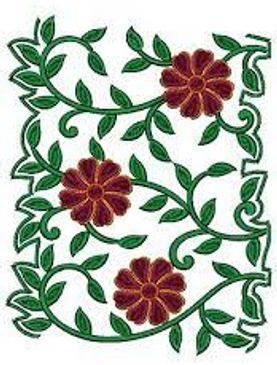
Nakshi Kantha
Santiniketan Leather Goods
Santiniketan Leather Goods
Santiniketan Leather Goods
Santiniketan Leather Goods
Santiniketan Leather Goods
Santipore Saree
Santiniketan Leather Goods
Baluchari Saree
Baluchari Saree
Santiniketan Leather Goods
Baluchari Saree
Dhaniakhali Saree
Bankura Panchmura Terracotta Craft
Bankura Panchmura Terracotta Craft
Bankura Panchmura Terracotta Craft
Bankura Panchmura Terracotta Craft
Bankura Panchmura Terracotta Craft
Bengal Dokra
Bankura Panchmura Terracotta Craft
Bengal Patachitra
Bengal Patachitra
Bankura Panchmura Terracotta Craft
Bengal Patachitra
Purulia Chau Mask
Wooden Mask of Kushmandi
Wooden Mask of Kushmandi
Wooden Mask of Kushmandi
Wooden Mask of Kushmandi
Wooden Mask of Kushmandi
Madurkathi
Wooden Mask of Kushmandi
Tangail Saree of Bengal
Tangail Saree of Bengal
Wooden Mask of Kushmandi
Tangail Saree of Bengal
Garad Saree
Banglar Muslin
Korial saree
Korial saree
Banglar Muslin
Korial saree
Banglar Muslin
Banglar Muslin
Banglar Muslin
Bihar
Bihar is located in eastern India, bordered by Nepal to the north, West Bengal to the east, Uttar Pradesh to the west and Jharkhand to the south. Its strategic location gives it access to key markets in eastern and northern India and proximity to major ports like Kolkata and Haldia. Bihar also benefits from the availability of raw materials and minerals from neighboring states, making it attractive for industries and trade. The state has a large, cost-effective industrial labor force, which supports its growing economic and industrial base.
In 2024–25, Bihar's Gross State Domestic Product (GSDP) is projected at Rs. 9.76 trillion (US$ 116.45 billion), growing at a CAGR of 11.31% from 2015–16. The per capita Net State Domestic Product (NSDP) also grew steadily at 8.45% CAGR (2015–16 to 2021–22). Agriculture dominates the state’s economy, employing around 80% of the population. Bihar ranks as the fourth-largest producer of vegetables and the eighth-largest producer of fruits in India. Other rapidly growing sectors include food processing, dairy, manufacturing, healthcare and education.
As of August 2024, Bihar’s merchandise exports stood at US$ 797.85 million, led by petroleum products, buffalo meat and cereals. The state's total power generation capacity was 7,993.27 MW, with a growing share from renewable sources.
gi tags
Bhagalpuri Zardalu
Shahi Litchi of Bihar
Shahi Litchi of Bihar
Shahi Litchi of Bihar
Shahi Litchi of Bihar
Shahi Litchi of Bihar
Katarni Rice
Shahi Litchi of Bihar
Katarni Rice
Magahi Paan
Shahi Litchi of Bihar
Katarni Rice
Mithila Makhana
Madhubani Painting
Mithila Makhana
Marcha Rice
Madhubani Painting
Mithila Makhana
Silao Khaja
Madhubani Painting
Madhubani Painting
Madhubani Painting
Madhubani Painting
Madhubani Painting
Applique (Khatwa) Work of Bihar
Applique (Khatwa) Work of Bihar
Applique (Khatwa) Work of Bihar
Sujini Embroidery Work of Bihar
Applique (Khatwa) Work of Bihar
Applique (Khatwa) Work of Bihar
Sikki Grass Products of Bihar
Applique (Khatwa) Work of Bihar
Sikki Grass Products of Bihar
Bhagalpur Silk
Applique (Khatwa) Work of Bihar
Sikki Grass Products of Bihar
Manjusha Art
Manjusha Art
Manjusha Art
Manjusha Art
Manjusha Art
Manjusha Art
Manjusha Art
JHARKHAND
Jharkhand is located in eastern India and shares its borders with West Bengal to the east, Uttar Pradesh and Chhattisgarh to the west, Bihar to the north and Odisha to the south. Its proximity to major ports such as Kolkata, Haldia and Paradip gives it a strategic advantage for mineral transport and trade. The state benefits from its location near the vast markets of eastern India and boasts rich natural resources and a strong industrial base.
In 2024–25, Jharkhand’s Gross State Domestic Product (GSDP) was estimated at Rs 4.7 trillion (US$ 56.78 billion). The state is among the richest mineral zones in the world, holding 40% of India’s minerals and 29% of its coal reserves. Major minerals include coal, iron ore, copper, uranium and mica. Mining and mineral extraction are key industries, with mineral production reaching 138.15 million tonnes in FY23. Agriculture also plays a vital role, with 80% of the rural population dependent on farming—rice being the dominant crop.
Exports from the state stood at US$775.1 million in FY25 (until August) and US$1.9 billion in FY24. Jharkhand has attracted cumulative FDI worth US$2.66 billion (Oct 2019–June 2024) and promotes industries through policies like the Industrial Policy 2012 and Jharkhand Energy Policy 2012.
gi tags
Sohrai – Khovar Painting
Sohrai – Khovar Painting
Sohrai – Khovar Painting
Sohrai – Khovar Painting
Sohrai – Khovar Painting
Sohrai – Khovar Painting
Sohrai – Khovar Painting
Odisha
Odisha, located in eastern India, shares its borders with West Bengal to the northeast, Jharkhand to the north, Chhattisgarh to the west, Andhra Pradesh to the south and the Bay of Bengal along its eastern coastline. The state is known for its rich cultural heritage, diverse ecosystems and strategic location along the eastern seaboard.
At current prices, Odisha’s Gross State Domestic Product (GSDP) is projected to reach Rs. 9.26 trillion (US$ 111 billion) in 2024–25. The state’s economy has shown strong performance, with the GSDP expected to grow at a compound annual growth rate (CAGR) of 13.03% between 2016–17 and 2024–25. Odisha has also attracted cumulative Foreign Direct Investment (FDI) inflows of US$ 171.96 million between October 2019 and June 2024, reflecting its economic potential.
In FY24, Odisha recorded merchandise exports worth US$ 11.93 billion. The majority of exports were driven by the mineral and metal-based sectors, particularly iron ore, iron & steel and aluminium products. The state remains a key contributor to India’s mineral output, supported by its robust infrastructure and industry-focused development initiatives.
gi tags
Araku Valley Arabica Coffee
Araku Valley Arabica Coffee
Araku Valley Arabica Coffee
Ganjam Kewda Flower
Araku Valley Arabica Coffee
Araku Valley Arabica Coffee
Kandhamal Haladi
Araku Valley Arabica Coffee
Nayagarh Kanteimundi Brinjal
Nayagarh Kanteimundi Brinjal
Araku Valley Arabica Coffee
Nayagarh Kanteimundi Brinjal
Koraput Kalajeera Rice
Koraput Kalajeera Rice
Koraput Kalajeera Rice
Odisha Rasagola
Koraput Kalajeera Rice
Koraput Kalajeera Rice
Kendrapara Rasabali
Koraput Kalajeera Rice
Kendrapara Rasabali
Odisha Khajuri Guda
Koraput Kalajeera Rice
Kendrapara Rasabali
Odisha Khajuri Guda
Similipal Kai Chutney of Odisha
Odisha Khajuri Guda
Dhenkanal Magji
Similipal Kai Chutney of Odisha
Odisha Khajuri Guda
Similipal Kai Chutney of Odisha
Similipal Kai Chutney of Odisha
Similipal Kai Chutney of Odisha
Kotpad Handloom Fabric
Similipal Kai Chutney of Odisha
Similipal Kai Chutney of Odisha
Orissa Ikat
Konark Stone Carving
Pipli Applique Work
Pipli Applique Work
Konark Stone Carving
Pipli Applique Work
Konark Stone Carving
Konark Stone Carving
Konark Stone Carving
Orissa Pattachitra
Konark Stone Carving
Konark Stone Carving
Khandua Saree And Fabrics
Berhampur Patta (Phoda Kumbha) Saree & Joda
Khandua Saree And Fabrics
Gopalpur Tussar Fabrics
Berhampur Patta (Phoda Kumbha) Saree & Joda
Khandua Saree And Fabrics
Berhampur Patta (Phoda Kumbha) Saree & Joda
Berhampur Patta (Phoda Kumbha) Saree & Joda
Berhampur Patta (Phoda Kumbha) Saree & Joda
Dhalapathar Parda & Fabrics
Berhampur Patta (Phoda Kumbha) Saree & Joda
Berhampur Patta (Phoda Kumbha) Saree & Joda
Sambalpuri Bandha Saree & Fabrics
Kapadaganda: Dungaria Kondh Embroidery Shawl
Sambalpuri Bandha Saree & Fabrics
Bomkai Saree & Fabrics
Kapadaganda: Dungaria Kondh Embroidery Shawl
Sambalpuri Bandha Saree & Fabrics
Habaspuri Saree & Fabrics
Kapadaganda: Dungaria Kondh Embroidery Shawl
Kapadaganda: Dungaria Kondh Embroidery Shawl
Kapadaganda: Dungaria Kondh Embroidery Shawl
Kapadaganda: Dungaria Kondh Embroidery Shawl
Kapadaganda: Dungaria Kondh Embroidery Shawl
Painting of Lanjia Saura (IDITAL), Odisha
Painting of Lanjia Saura (IDITAL), Odisha
Painting of Lanjia Saura (IDITAL), Odisha
Cuttack Rupa Tarakasi (Silver Filigree)
Painting of Lanjia Saura (IDITAL), Odisha
Painting of Lanjia Saura (IDITAL), Odisha
Ganjam Kewda Rooh
Painting of Lanjia Saura (IDITAL), Odisha
Ganjam Kewda Rooh
Painting of Lanjia Saura (IDITAL), Odisha
Ganjam Kewda Rooh
